
.png.b65a310adf7c076fa39cc70a3ec91c19.png)
Mr. Fox
-
Posts
6,741 -
Joined
-
Days Won
830
Content Type
Profiles
Forums
Events
Posts posted by Mr. Fox
-
-
Well said, @Reciever. As people that have common interests and at least a form of friendship we should be able to have some degree of expression of what and how we think. Not to the point that we derail threads, have bickering or attempt to evangelize other forum members, but freedom to speak openly without having to worry about a chip getting knocked off a person's shoulder that is looking for reasons to virtue signal and be offended. Certain groups of individuals on the web actively seek reasons to be or play offended, use that as a cloak for their intolerance and leverage to silence those who have differing perspectives. We have already seen way too much informal and self-anointed police activity attempting to squash messages and opinions that go against the "official" narrative espoused by dictators of virtual space. In real life I have lots of family and friends that do not see eye-to-eye on everything, but we do not allow that to stand in the way of being civil and enjoying the things we have in common. That should be true with our virtual friends, too. If you have no idea what someone thinks or believes, then you really don't know them. Hard to consider them a friend or care about them as a person. Diversity is one of the things that makes America great. We don't have that when there is no freedom of expression on a two-way street. What we have in that case is a totalitarian variation of mob rule, often with the "mob" being a minority that likes to cry wolf and think their own poop doesn't stink.
-
 2
2
-
-
6 hours ago, tps3443 said:
Last night I was benching 3DMark profile test. And the same is true for Timespy physics testing etc.
Anyways, First run on profile test and I did not even make it to the top 100 leaderboards LOL. @Mr. Fox had beaten me. I reduced my ring clock from x51 to x48 and the difference was huge. Anyone else experience this with higher ring overclocking, may provide lower physics scores and lower 3DMark Profile test scores too. I saw the same thing with 11900K, but it only happens with physics test or profile testing. 🤷♂️
Yes, 100%. Going too far with ring/cache ratio or too high on E-cores can lower benchmarks scores just as going too far with a GPU memory overclock can. It might not crash or throw a BSOD, but it will begin to degrade because the CPU or GPU are struggling and not operating efficiently. I have seen that numerous times. Sometimes disabling cores/threads also increases benchmark scores. It varies by benchmark. There are also some benchmarks that do not benefit as much from overclocking the CPU cores and benefit more from the system memory overclock.
On a similar note, I have found that CPU and GPU overclock setting can bench stable and run 24/7 stable, but when you try to play a game with a bunch of sloppy coding or throw an API wildcard into the mix it is no longer stable and you have to tone things down to accommodate the issue.I think the more complex software and hardware becomes, the more wildcards we encounter that require adjustments so that everything plays nice together. I think that is also why some people are not into overclocking as much. It requires more effort and experimentation than it used to. Some people view that as a hassle.
I've noticed more often lately that DX12 games can become more glitchy at times than a game that uses an older DX API. I have seen that with system memory overclocking. You can pass all memory tests with flying colors, no errors, and everything working smoothly. But, then one day you try to play a game that uses DX12 and it doesn't work right, won't launch or something else, and lowering the system memory overclock straightens it out.
-
4
-
-
-
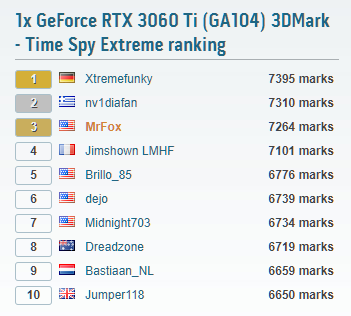
Well, my shunt-modded 3060 Ti FTW3 on chilled water just took 3rd place from buildzoid's 3060 Ti on LN2.
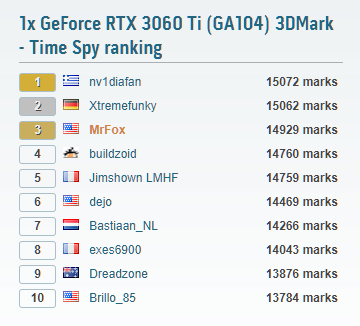
https://hwbot.org/submission/5216196_ | https://www.3dmark.com/3dm/90137564#

-
4
-
 1
1
-
 2
2
-
-
20 minutes ago, johnksss said:
The picture you posted is for the Gaming Trio. Not sure if that makes a difference, but that block also looks different from mine. The picture on the box also does not look like the block inside the box.
The Gaming Trio and Suprim used to be the same waterblock part number and it was the same part number as your Microcenter listing. Now Corsair's web site has the same part number as before, which matches Microcenter, but the description on the Corsair site no longer says "Suprim" in it. If the missing phase inductors on the Trio are in that same location where the block needs to be carved out, they probably need to redesign the block so it has the recessed area where the Suprim has inductors and the Trio does not. The solder pads on the PCB are there on the Trio, but the components themselves are not.
The Alphacool Eisblock had a similar issue on the Suprim, but rather than a recessed area like the Corsair block, the cold plate was not large enough to cover the VRMs on the Suprim. The body of the cold plate stopped where the VRMs on the Trio ended and leave the additional components exposed with no cooling on the Suprim.
-
1
-
-
8 minutes ago, johnksss said:
You called it. It has fewer power stages.

Now i can take it to the shop and have them mill out the needed space but i'm like.....wth though.
That's very weird. The EKWB, Alphacool and Bykski blocks supposedly also fit Suprim and Trio. That almost looks like they put the wrong block inside the box or something. Are there any part numbers etched in the body that would indicate that?
Here is a link to the Corsair store page. It is definitely different than it was a week or two ago, before my Suprim died. It used to say "Suprim / Trio" and now only "Trio" but the part number is the same as before.
What Microcenter shows is exactly what Corsair USED TO show, but now it only says "Trio" on their web site. It never said Liquid though.
-
2
-
-
32 minutes ago, johnksss said:
Maybe that's it. This one says XG7 for the Suprim.
I thought this block was for the X as well.
I had a typo. The "G" is correct. I believe the Suprim/Suprim X (air or liquid) are the same PCB and I think the Trio is as well. The Trio has fewer power stages. I believe the only difference between the Suprim/Suprim X is the the firmware. So, it should be the correct block, but either packaged wrong (wrong block in the Suprim box) or just made wrong.
What's weird is now the Corsair site no longer lists the Suprim. It used to list the Suprim and Trio as the exact same part number. SKU CX-9020021-WW. But, now that SKU no longer says Suprim. I know this because Corsair was sending me one to do a review and it was cancelled because the GPU died.
Does it look like it is made for a entirely different GPU, or is something off by a little bit? It is hitting something like a power port for the AIO pump that the non-Liquid Surpim or Trio might not have on the PCB for the air cooled card?
-
3
-
-
Just now, johnksss said:
Well, decided to grab the Corsair water block tonight and guess what.... it doesn't fit.🤦♂️🤦♂️
The XC7 doesn't fit the Suprim?
-
3 hours ago, Papusan said:
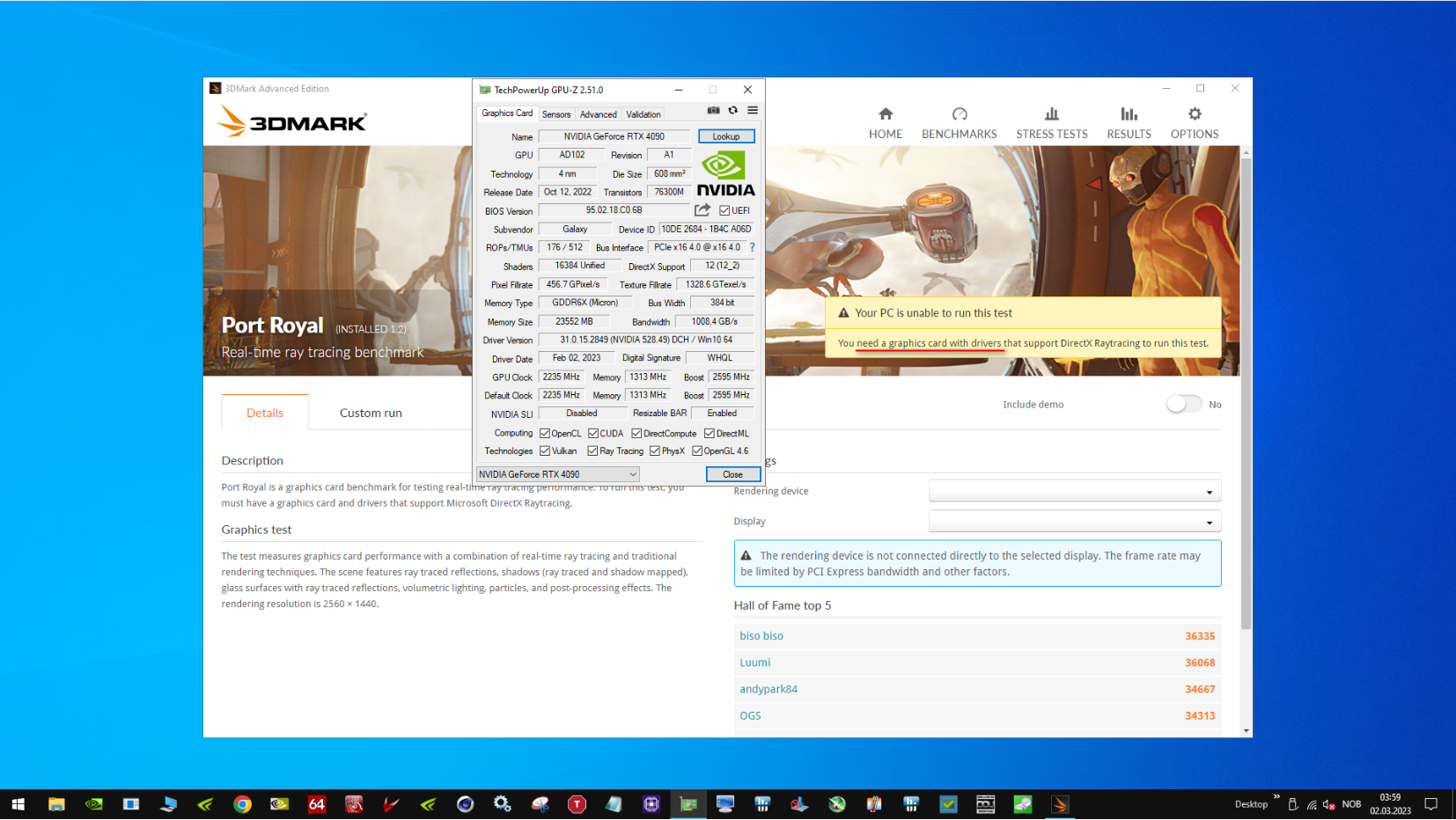
This is todays tech bro Fox. Isn't it amusing or does it sucks? Run the updater and this is what you get. On top... I have paid for this software. 3DMark Suite ain't freeware. So not much different than what you get from Microsoft.

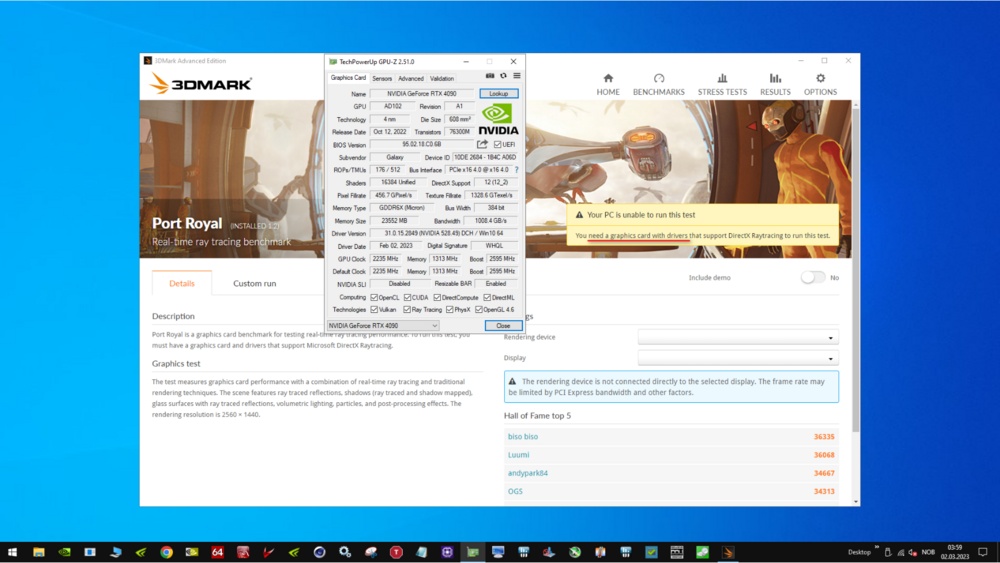
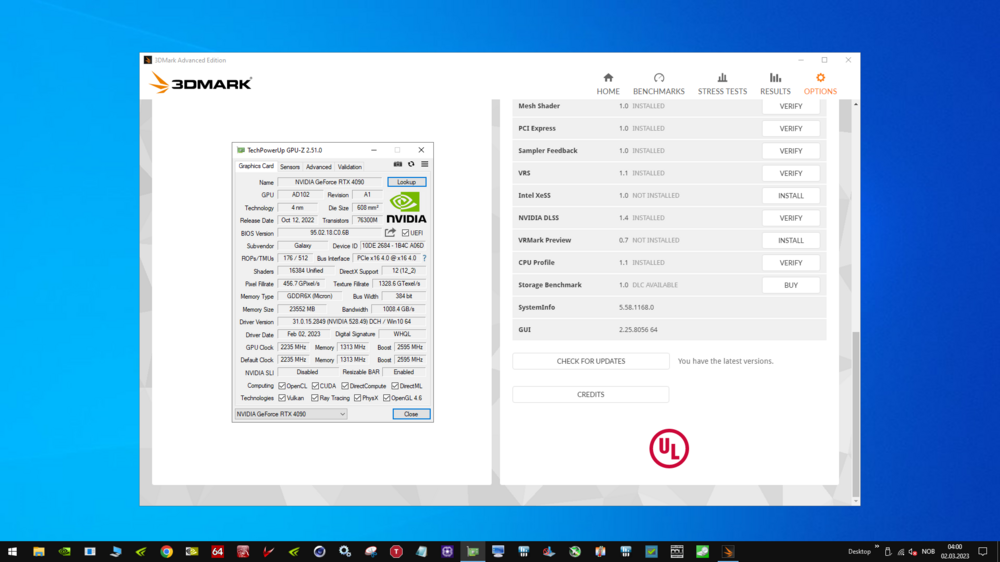
The incompetence of the self-anointed leaders of the modern tech world that we live in is truly unlimited. Their incompetence is matched only by the inept losers that look to them for guidance. In some circumstances, it is like the blind leading the blind. In probably equal measure, it is like the blind misleading the blind. They don't know what they don't know, and their followers don't know how little they know... a technology circle jerk.
-
2
-
-
25 minutes ago, Reciever said:
Thats true but I will be restricted to whats on that platform, Workstations traditionally dont allow overclocking, and this precision (as far as I can tell) follows the trend. Should still allow for me to test hardware without inconveniencing my down time.
Basically have had no use for the Precision for over a year until it dawned on me that I should be able to use it for GPU benching, its the system that has a 9800X installed.
You can bench anything, and if it's something that nobody or hardly anyone else has benched, then you'll likely be at or near the top of the mountain with that hardware. It doesn't have to run well or be fast to win if the machines you're competing against are equally old and anemic.
If you look around you might even find an unlocked bios floating around on the internet for that old thing that would allow you to adjust the core clocks or the base clock and squeeze a few more megahertz out of it than others have with theirs.
Sometimes you'll even find yourself in the top 10 worldwide because there have been fewer than 10 submissions LOL. This is especially true in the case of mid-range and budget hardware that nobody ever purchased for number chasing because it wasn't capable in it's day of winning anything due to being outclassed. You can rack up a lot of hardware points benching stuff like that.
-
3
-
-
51 minutes ago, Reciever said:
Well worst case scenario it can just be a test best of sorts and get some overclocks dialed in
If you are using a much newer CPU and chipset with an older graphics card you will automatically displace a lot of old benchmark scores that were good in their day, but the newer processor and chipset will probably result in better scores even if they are not overclocked. The improved IPC on the newer tech can often be enough to overcome the old CPU. The other thing to keep in mind is that 5 years ago it was difficult to overclock the CPU to the clock speeds that are stock clocks now. Add that increased clock speed, and potentially increased core count, to the improved IPC and it's sometimes easy to beat really old benchmark scores with the old graphics cards paired with a modern CPU.
In some cases you can actually get higher benchmark scores with an old GPU and a very powerful modern CPU. Aquamark is one such example. 3DMark 2001 is another. They rely on the CPU more than the GPU. You may need to disable some of the cores to achieve higher scores because the old software does know how to handle them.
What's nice about that, as Brother @Papusanhas discovered, the chance that an old record holder still has those old GPUs is pretty slim. If you take the gold, chances are fairly good nobody's going to try to win back what you take from them. They might not be very happy about it, but all is fair and love and war.
-
2
-
 1
1
-
-
46 minutes ago, Raiderman said:
https://hwbot.org/benchmark/wprime_-_32m/halloffame
#16 in the world...👍
Of the Top 20, only two are not on LN2...brother @Mr. Fox and brother @Raiderman 🤘

That's awesome.
40 minutes ago, Raiderman said:Wow, send it my way if you dont want it. 😄 Ive been pretty impressed with the little 6800XT. Its a pretty darn fast card.
LOL I haven't even tried it yet obviously. Like the guy on Gamer's Meld says, "time will tell"
17 minutes ago, Reciever said:Hey guys, in terms of GPU benchmarking, would a workstation suffice or would I lose too much points from stepping off a overclockable system?
The 10850k system is doing well as a DD but I dont want to tear it down for benching all the time lol, I have a precision 5820-x and was thinking of using that for tuning stuff during the week and OS pruning. I finally have an SLI cable so now I want to get back to GTX 690 SLI, GTX 280 SLI, GTX 295 etc etc
Probably not very much at all in benchmarks that do not measure processor speed and performance. Port Royal and Speedway do not assign a physics or combined score. In cases where that is measured, it will definitely matter.
-
1
-
 1
1
-
-
41 minutes ago, Rage Set said:
Yes! That is why I am not buying a 4090. I know the 4090 TI will be coming and I've learned my lesson with the 3090. While I have A LOT of anger in my heart with AMD over the TRX40 shenanigans, I wasn't angry with them with the 6900XT getting replaced with the 6950XT. I think it due to having a 6900XT that is a 6950XT in everything but name. You also hit the nail on the head with AMD and Linux.
If you are willing to pay shipping back and forth, I will let you borrow my Asrock 6900 XT with the block (I purchased the block, but I have never blocked the actual card.) for a month, so you can test things out. If you end up wanting to keep it, we can work out a fair price for both or you can simply ship it back. I really don't use it any more, it is sitting in my X570 Dark rig.
Wow, I don't know how I could refuse a free test drive like that. I will send you a PM.
-
2
-
1
-
-
23 minutes ago, Rage Set said:
Buy a cheap 6950 XT with a waterblock, get some points and sell it. You will also get to see what the Red users were using with the MorePowerTool. The downsides are you won't have a huge pool of buyers when you sell and AMD's own overclocking tool can be funky sometimes. It loves to crash when you push the card too far.
Hmm. Maybe. I'm not sure I actually want to know what the Red users are doing. That didn't work out well for me with the 5950X abortion. But, it's probably smarter than flushing money down the toilet on a 7900 XTX. At least I'd be able to keep using Windows 7, and the Red pill is the better option on Linux from what I hear.
I'd be lying if I did not admit to having curiosity, even though my appetite for risk is very low. Still, the thought of rolling the dice on a Red product makes me feel ill. The last time Team Red had a product that I actually liked, and didn't regret buying, was close to 15 years ago (Radeon HD 5870) and it was made by ATi, not AMD.
On the other hand, I also know the next stop on the Green Goblin's "Via Dolorosa" is 4090 Ti. That will be out before the ink on any money spent on 4090 has had time to dry.
Lots to think about. Taking time to think is smart. Thanks for the suggestion, brother.
-
1
-
2
-
-
34 minutes ago, Tenoroon said:
You could always do what @Papusandoes and bench older cards. I think you will have more fun than you think. It'll also get some points for our team 😉
I'd like to start benching those old Arrandale/Clarksfield chips but that darn motherboard I have is essentially a paperweight. Maybe I can find a way to brute force a higher BCLK speed, or a cheap old M17x... I'll accomplish it one dayI've seriously considered that, and Brother @johnkssshas suggested it many times. He does it, too. But, I will be the first to admit that I am a real weirdo and don't really like doing retro tech. I don't know why, but it just doesn't make me happy. Even if I gained a lot of points on HWBOT like Brother @Papusanhas, I wouldn't be content with that. It's probably related to my all or nothing, onward and upward/go big or go home character flaw. Under any other circumstances it would be a good idea. If I spend a $200-$300 buying antique GPUs for HWBOT points and shortly thereafter waste money on a 4090, then I am just wasting even more money. Plus, I'm not nearly as excited about HWBOT as I used to be because of all the idiotic politics.
I also thought about saving $800 and grabbing a 7900 XTX for a benching toy, but after I look at the results there is nothing to be gained over my 3090 KPE. I'd be buying a weaker part of unproven quality, that sucks at ray tracing and one that most people don't want. (Top 10 scores for 7900 XTX are lower than my 3090 KPE scores in Time Spy, Port Royal, 3DMark 11, etc.)
That's why I think doing nothing for a bit and reflecting on things before letting my passion lead me down another rabbit hole is probably a good idea.
-
5
-
-
5 hours ago, Mr. Fox said:
the trash Strix 4090 that I returned to NewEgg for a refund (payment currently pending)
NewEgg was not able to replace the Strix turd so they issued a refund. Huge relief that I don't have to roll the dice on another ASUS QC lottery that costs between $300 and $400 more than something from a competitor that offers equal or greater quality.
I am tempted by the Suprim X (non-Liquid) in stock at the Egg, but think I am going to just sit back and ponder whether or not I actually want it bad enough to spend $1799 on that. B&H also has the 4090 Amp in stock for $1699 that is similarly appealing. Maybe if I procrastinate I will decide I don't want any 4090 bad enough to throw that kind of money on one. That's a butt-load of money to blow on a benching toy that I have no good use for otherwise. Don't need it for gaming or anything else... the 3090 and 3060 Ti both handle gaming like a champ, leaving nothing to be desired on my part, so yeah... just a crazy expensive benching toy.
-
6
-
1
-
-
10 minutes ago, Papusan said:
The rest is in the other hand😎
I thought maybe that was all the money left after the rest was wasted on a new turdbook.
-
4
-
-
47 minutes ago, tps3443 said:
BGA cannot be upgraded. But, it can be upgraded if you sell the laptop after a few years and just buy another one lol. That’s what you did with your 3090KP and 12900KS (Both items cost similarly to a whole high end gaming laptop)
4090 and 13900K cannot be upgraded either. I’d have to replace them after a few years. Just like a gaming laptop.
If I buy a 4090 and a waterblock that’s gonna cost me $1,969 USD.
That’s kinda how I’ve been looking at it anyways. I guess if I bought a 4090 and a 13900KS right now that is easily $2,300+ for (2) parts. In which I could nearly buy an entire laptop.
Regardless of BGA or desktop, we’d be wasting money on technology that is disposable either way and becomes worthless after a while. It would be the same old rinse and repeat with a laptop as it would be with a desktop.
I view that as a really lame argument and you're missing the point entirely. But, it is common and that's why all laptops are BGA excrement. Consumers have bought into that line of thinking and now everyone is saddled with trash being the only option if they want a laptop.
You can do what you want to if it is not BGA as long as parts are available. You can't upgrade to a better part model within a single generation if you already bought the best for that generation, but you can replace or repair those parts as needed. You can upgrade to next generation, or you can upgrade to a better version within the same generation. You can sell your 3090 and get a 3090 Ti, or wait and get a 4090 Ti, etc.
47 minutes ago, tps3443 said:If I buy a 4090 and a waterblock that’s gonna cost me $1,969 USD.
And it will still have value when you replace it later. You can use is as an upgrade on a second desktop or sell it for probably half or more than what you paid for it. You have options. With the turdbook, it will be worth less than half what you paid for it, maybe less than half, when you are ready to replace it. You cannot upgrade it or affordably repair it and you lose more money in the long run. The laptop OEMs know this and make more money in the long run. That's why they enjoy screwing everyone that buys their garbage.
8 minutes ago, Etern4l said:A desktop is partially upgradable and trivially repairable. My case is 15 years old, PSU lasted 14 years, fans lasted 15 years, an AIO should be good for 5 years. If I need a faster GPU, I can replace just this component without touching anything else. I can reuse that component in another PC, or sell it - selling a graphics card is presumably easier and inherently less risky than selling a high-end laptop.
A $2300 13900K+4090 combo will provide 1.5x+ CPU processing power, and the GPU will be about 2x faster than the fastest BGA laptop.
Right. All or most of my components get a double-life. Most of the parts span multiple upgrades and an upgrade of one machine either results in sale of the parts removed, or an automatic upgrade of my second system and sale of the parts removed from that one. Lots of flexibility and options. Not a dead-end, throw-away compromise that loses value faster than a used car and performs poorly (less than what is is capable of) due to poor engineering, gimped firmware, and the manufacturer focusing on form over function.
I am fine with people choosing to take that path. It's their money and their choice. I'm just not fine with it being the only option available or the rationalization that it is OK that laptops are all BGA garbage because of [insert lame excuse].I paid $500 for my turdbook. It's available when I need it, and I don't need to pretend it is a "desktop replacement" because it isn't. It's a $500 mobile solution for isolated needs. It will play games if there is some weird reason I would need to use it for that. If it could not and I can't do without playing games for a few days, then I need help with other personal problems, LOL.
-
3
-
1
-
-
Looks like EK is now offering a direct die AIO kit for the people that are scared of going the custom loop route.
-
1
-
-
1 hour ago, tps3443 said:
I don’t see what all the fuss is over BGA.
Because you are not alone in having lowered personal standards of acceptability (it is very common) BGA feces has become the new normal and now the only options available for purchase are rubbish. It has nothing to do with whether or not these turdbooks perform well. It is about how they are made, and why they are made as they are, that make them unacceptable. The bar is set as low as it can go now.
Think about if you had received a horrible CPU sample instead of your golden chip, or the trash Strix 4090 that I returned to NewEgg for a refund (payment currently pending). What are your chances of being able to return the laptop because the silicon sample for the CPU or GPU (or both) is lousy and it doesn't overclock worth a darn? Or, you decide you don't like how it is made in some other way and wish you had made a different choice? You cannot sell the CPU or GPU, or return them, or exchange them. They are permanently integrated into the mainboard. If either one of them die outside of warranty, you cannot replace them with a new or used part like you can if they are not BGA. There is no opportunity for mitigation of your bad luck or poor purchasing decision. With replaceable components the CPU or GPU can be the same, better, maybe newer, or older and less expensive, a new part or a used part... your choice.
The BGA turdbooks are dead-end, one-shot wonders. You draw a short straw and you're screwed. Need a new GPU outside of the warranty? Are you going to pay $1200-$1800 (or more) to revive an obsolete product with a replacement mainboard, then hope/pray that the CPU and GPU attached to that mainboard are not crappy samples? Or, are you just going to go vomit up another $2500-$3500 for a whole new turdbook? I'm not OK with that. Neither option is good or acceptable. It is difficult for me to understand how anyone could be OK with that. That's just really messed up IMHO.
1 hour ago, tps3443 said:But portable gaming machines are just really cool!
I know it doesn't matter in the grand scheme of things, but I disagree with that statement. I do not believe they are cool and there is nothing that can be done to convince me that they are. If the person buying that believes it, then that's all that really matters. It's their money. Not my problem, other than there are no acceptable options. But, either way, thinking they are cool is not a legitimate basis for rationalizing the acceptance of an inferior engineering concept or greed-serving design model. If what people like me think about this mattered, then we wouldn't be left with exclusively disgusting castrated turdbooks as the only options to choose from.
-
1
-
6
-
-
10 hours ago, Papusan said:
Doesn’t matter. Older “normal” laptops can do what they are meant to do. Portable usage and some gaming on the go. I don’t see the need or pleasure spending +3000$ on modern laptops. I wish I could find an cheap X170 here home. But people are happy with them and use it the whole lifespan. Often 5 years +. Maybe I find one within 2 years to supplement my other old laptops :) A hell lot better than buy a thin 500$ Jokebook. And much more fun.
Moore's law rambling about Nvidia's laptop scam... 56:51 RTX 4070 / 4060 / 4050 Laptop Reviews
I'm at the point now where I actually don't really care anymore. Even when good laptops were available they required compromises that I am no longer willing to make because I don't need to. I can use a cheap piece of crap for mobility when it is necessary. Otherwise, there is no good logic for making compromises. If I were still traveling and away from home 70-75% of the month I would feel differently and be extremely disappointed rather than not caring. But, it doesn't really affect me now, so that is why I don't care. It sucks real bad for those it does affect. People that it shouldn't affect because they do not travel extensively and need mobility should stop wasting their money on turdbook garbage. Stop feeding the pig!


-
2
-
1
-
2
-
-
37 minutes ago, tps3443 said:
Thanks, let me know an exact water temp. I was going to compare with the same clocks and see how our direct dies compare to each other.It changes throughout the day. RIght now it is 31°C. Around 3:00 PM my office was 80°F and the water was 36°C. If you want to due a true comparison, you'll also need to set the core voltage to 1.365V static. I don't have a CPU that can run voltage as low as yours. VCCSA 1.300V, power limit is 4095W (PL1 and PL2) and amps (current limit) are maxed out, VDROOP disabled and Intel Guardband disabled. My memory is clocked to 8000 CL35-48-48-42 and 1.475V, which will also increase the CPU temperature.
I almost bought one of these. Based on Steve's review, I think I still want one. It doesn't look as nice as the Intel A770 but it looks like Acer did a really nice job on it.-
3
-
2
-
-
11 hours ago, tps3443 said:
What is your water temp?Around 32°C. My office is hot (78°F) and I'm not running the chiller because that would just make my office hotter.
1 hour ago, Raiderman said:https://hwbot.org/submission/5215247_
Now number 1 for Ryzen 7950X, Number 5 for 16x CPU, 19th in the world overall, 3000ms behind brother @Mr. Fox
Thanks Windows 7 👍
Congratulations, brother. Nice job!
-
2
-
-
2 hours ago, tps3443 said:
The Gen13 model is longer, and the cold plate fins are literally 50% longer, and about 20% wider.
I'm glad they fixed their issues with the LGA 1700 block. The first revision that they ripped me off on was an absolutely worthless piece of trash. The 10th Gen was amazing.
2 hours ago, tps3443 said:EKWB has pushed orders back even further for their very own direct die option
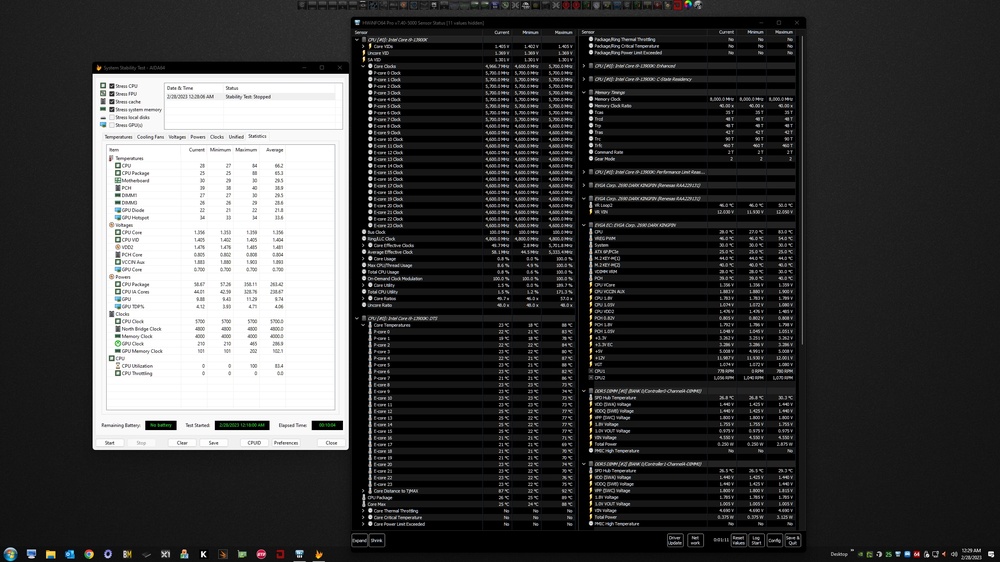
I got mine from EKWB and installed it last night. I really like it. Super well-made and works nicely. Knocked about 6-8°C off my max load temps and about 3-5°C lower on my idle temps.


It came with Conductonaut and I used it, but I see now why I stopped using it and went back to Liquid Pro. It is too watery and core temps are less uniform. If it doesn't even out I will probably remove the Conductonaut and replace it with Liquid Pro. But, yeah... good results for sure. Ambient temperature in my office is 75°F (25°C) right now.
-
2
-
3
-
1
-



*Official Benchmark Thread* - Post it here or it didn't happen :D
in Desktop Hardware
Posted
If I had to pick something good about living in a heavily regulated place like SoCal or Chicagoland, I think it would be having a Microcenter, LOL. (No offense to people that live in those places and love it, just saying there always something you can be happy about if you try hard enough to find something to be happy about.)